No Copy


No Right Click

Selamat Datang di Situs Belajar PLC dan SCADA

Blog gratis yang menyajikan berita seputar PLC dan SCADA.

Microsoft Windows 10

Berita seputar Microsoft Windows 10. Membahas berbagai informasi mengenai Microsoft windows terbaru.

Apple OSX

Artikel yang membahas tentang OSX terbaru dari Apple tentu sangat menarik untuk dibaca. Tak kalah serunya jika kita paham mengenai tips dan trik yang ada didalamnya.

Photography

Photography asik dan menarik jika kita mengetahuinya lebih dalam. Disini kita bisa melihat berbagai hal dari sudut pandang photo. Menarik untuk dipahami.

Friday, January 16, 2009

Teknologi Robotic untuk militer

Artikel ini sangat menarik untuk dibaca. Baca rencana Amerika serikat di tahun 2020 akan mengaplikasikan 30% sistem robotic utk militernya.


There is an interesting article on the Washington University in St Louis web site about the increasing use of robotics in military operations. University researchers Few and Smart note that the military expects to have robotic forces of up to 30% of the Army by 2020. With the increasing deployment of unmanned aerial vehicles (UAV), robots searching for IED’s and robotic surveillance devices, this goal seems very achievable. With that in mind it is probably time to ask the question; can military robots be used for chemical facility security?

Teleoperated Robots

According to the article the current generation of robotic devices deployed with the US military utilizes some level of teleoperation; that is a remote human uses a communication device to control the operations of the robot. For the foreseeable future robotic devices in military and security service will have their major functions controlled by a remote human operator. There will be a general increase in the use of self-directed deployment or control of auxiliary devices and services.


Security Roles for Robots

Most military robots currently deployed are being used as human-substitutes in high risk situations like explosive ordinance disposal (EOD) or IED detection. The defining exception to that generality is the use of UAV’s for long-linger time observation of remote areas. This is the most likely model for initial robotic security deployments.


Many large chemical facilities have lengthy perimeters that are difficult to secure. Irregular fence lines, natural and man-made obstructions, and lack of manpower make it difficult to detect and confirm perimeter incursions. Early detection is the key to allowing for adequate deployment times for active security measures.


Perimeter Surveillance

Larger UAV’s like the Predator would not be practical for any but the largest facilities. There are a number of smaller UAV’s that may be more appropriate for large high-risk chemical facilities. They could be used for both routine perimeter patrol and immediate response for checking out intrusion detection system alerts. Adding chemical sensors would allow for their use in monitoring dispersion of chemical clouds.


As the ability to employ semi-autonomous navigation (point-to-point route selection for example) for ground robots improves their utility for perimeter patrol and immediate response will increase. If the operator can navigate the robot by selecting a series of pre-programmed locations instead of driving the robot, a single operator will then be able to operate multiple observation robots. This will go a long way to overcoming the security manpower cost problem.


Armed Robots for Emergency Response

One of the most controversial uses of robotics in military service is the use of the robot as a weapons platform. Even with full teleoperational control of the weapon system, there are still concerns about inadvertent weapons discharge due to control system or communication system malfunction. These concerns may be substantially reduced by using non-lethal weapons.


Many of these concerns, and general concerns about weapons employment in a chemical facility, could be further reduced by adding a redundant safety-interlock to the weapon’s control system. This interlock could prevent the weapon from being discharged in a number of pre-defined situations. ‘No Fire Zones’ could be programmed into the interlock to prevent weapons discharge in unsafe areas of the facility. A flammability sensor could be added to the platform to prevent discharge of a ‘fired’ weapon in a flammable environment.


A Future for Robotic Security

As the military continues to improve the sophistication of their robotic systems it becomes more likely that security robots will be deployed in the defense of high-risk chemical facilities. Not only does the sophistication increase, but the unit cost of these robotic systems will come down. Additionally, the number of experienced robotic operators that are veterans of robotic combat operations will increase.


It is likely that it will be these veterans that will be behind the companies that develop and start the deployment of security robots. With their government supplied education, practical experience, and security training they will be the natural leaders of the robotic security businesses of the future.


The Israel Army is procuring more unmanned ground vehicles for combat missions in border areas. (Memang rencana busuk sudah dijalankan oleh Israel, seperti yang terjadi di Gaza sekarang ini).

The Ground Forces Command has purchased ast least four UGVs for combat missions along the Gaza Strip and Israeli border with Lebanon. The platforms were identified as G-Nius, developed and produced by Israel's Elbit Systems.

"We don't need manned patrols along the border," Elbit Systems president Joseph Ackerman said. "We could use UGVs." [On Aug. 5, the Israel Air Force announced the deployment of the Sniper electro-optic reconnaissance system. Sniper, developed in Israel by several defense contractors, was said to enable air defense operators to track fighter-jets at a distance of more than 70 kilometers.]

US army in 2020
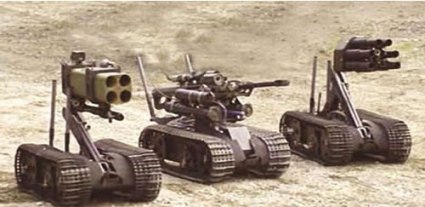
U.S. technologists have revealed that the country's military has plans to have about 30 per cent of the Army comprised of robotic forces by approximately 2020.

Doug Few and Bill Smart of Washington University in St. Louis say that robots are increasingly taking over more soldier duties in Iraq and Afghanistan, and that the U.

S. Army wants to make further additions to its robotic fleet.
They, however, also point out that the machines still need the human touch.

"When the military says 'robot' they mean everything from self-driving trucks up to what you would conventionally think of as a robot. You would more accurately call them autonomous systems rather than robots," says Smart, assistant professor of computer science and engineering.


All of the Army's robots are teleoperated, meaning there is someone operating the robot from a remote location, perhaps often with a joystick and a computer screen.
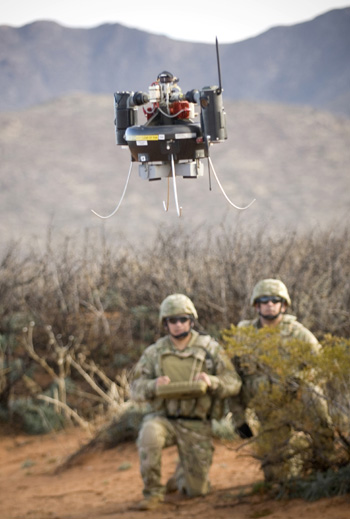
While this may seem like a caveat in plans to add robots to the military, it is actually very important to keep humans involved in the robotic operations.

"It's a chain of command thing. You don't want to give autonomy to a weapons delivery system. You want to have a human hit the button. You don't want the robot to make the wrong decision. You want to have a human to make all of the important decisions," says Smart.

The technologist duo says that researchers are not necessarily looking for intelligent decision-making in their robots. Instead, they are working to develop an improved, "intelligent" functioning of the robot.

"It's oftentimes like the difference between the adverb and noun. You can act intelligently or you can be intelligent. I'm much more interested in the adverb for my robots," says Few, a Ph.D. student who is interested in the delicate relationship between robot and human.

He says that there are many issues that may require "a graceful intervention" by humans, and these need to be thought of from the ground up.

"When I envision the future of robots, I always think of the Jetsons. George Jetson never sat down at a computer to task Rosie to clean the house. Somehow, they had this local exchange of information. So what we've been working on is how we can use the local environment rather than a computer as a tasking medium to the robot," he says.

Few has incorporated a toy into robotic programming, and with the aid of a Wii controller, he capitalizes on natural human movements to communicate with the robot.

According to the researchers, focussing on a joystick and screen rather than carting around a heavy laptop would help soldiers in battle to stay alert, and engage in their surroundings while performing operations with the robot.

"We forget that when we're controlling robots in the lab it's really pretty safe and no one's trying to kill us. But if you are in a war zone and you're hunched over a laptop, that's not a good place to be. You want to be able to use your eyes in one place and use your hand to control the robot without tying up all of your attention," says Smart.

Devices like unmanned aerial vehicles, ground robots for explosives detection, and Packbots have already been inducted in the military.

"When I stood there and looked at that Packbot, I realized that if that robot hadn't been there, it would have been some kid," says Few. (ANI)
Japan membuat sex robots

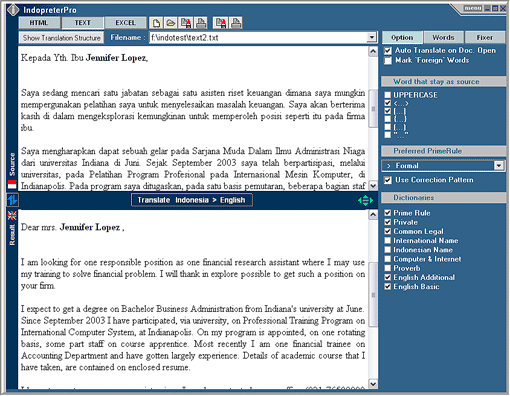
Baca artikel di bawah, kurang mengerti? Pake software indopreter untuk menerjemahkan, lumayan kan bisa membantu. :)

She is big-busted, petite, very friendly, and she runs on batteries.

A Japanese firm has produced a 38 cm (15 inch) tall robotic girlfriend that kisses on command, to go on sale in September for around $175, with a target market of lonely adult men.

Using her infrared sensors and battery power, the diminutive damsel named "EMA" puckers up for nearby human heads, entering what designers call its "love mode".

"Strong, tough and battle-ready are some of the words often associated with robots, but we wanted to break that stereotype and provide a robot that's sweet and interactive," said Minako Sakanoue, a spokeswoman for the maker, Sega Toys.

"She's very lovable and though she's not a human, she can act like a real girlfriend."

EMA, with stands for Eternal Maiden Actualization, can also hand out business cards, sing and dance, with Sega hoping to sell 10,000 in the first year.

Japan, home to almost half the world's 800,000 industrial robots, envisions a $10-billion market for artificial intelligence in a decade.

Aplikasi Robotic Di Pabrik Otomotif

Automation System

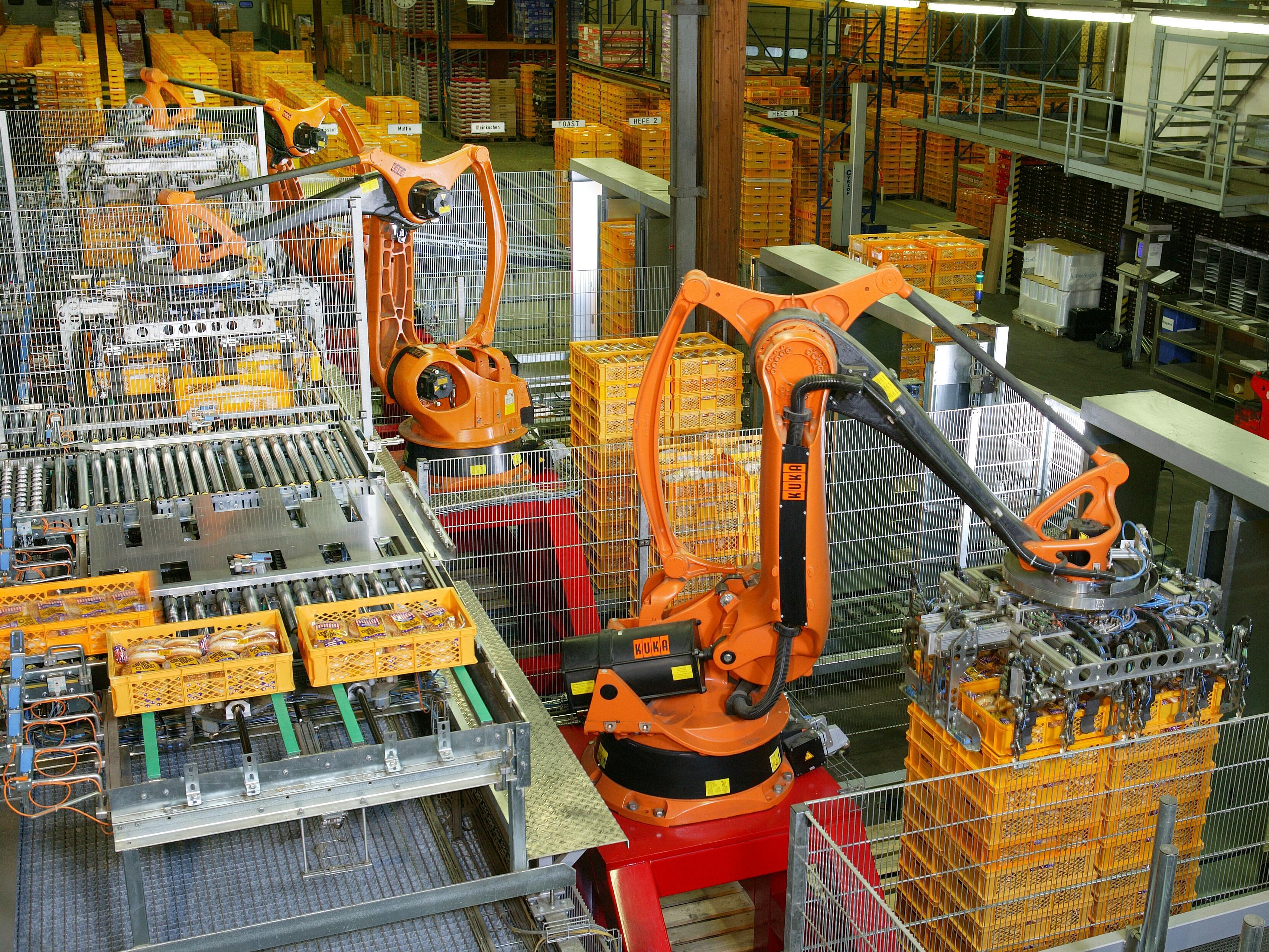
Aplikasi tangan-tangan robot di pabrik otomotif. Bagaimana tangan robot tersebut bisa bekerja. Jawaban Dengan penerapan dan implementasi sistem otomatisasi PLC & SCADA mesin ini bekerja. Selanjutnya.... Lebih banyak baca buku, lebih banyak tahu.


Factory robotic automation is based on the application of computers. It involves various technologies. These technologies are applied by persons highly qualified in automation engineering. The technologies involves in factory automation are motor control and drive system, machine vision system, programmable logic control system and manufacturing executive systems. These are also known as automation tools without which automation is not possible.


robotic automationFactory robotic automation facilitates creativity and perspective to implement robot technology. It makes many manufacturing processes possible without human interference. Automation integrates logic, power, information technologies and process into one drive system. Automaton applied in the factory uses machine vision system. It uses robotic machine handling process to perform identification, orientation and decoding tasks. The programmable logic control system one the important automation tools facilitates the successful implementation of the automation control system


The robotic palletizer is capable of producing an infinite variety of robotic palletizing patterns. The patterns are driven by your shipping needs and can be varied based on the product being palletized. There is need to unify the business with plant floor system in the present global scenario. The factory automation makes it possible. It also provides flow of information to instruct people and machines to deliver the product as per requirement.


Practical Industrial Safety, Risk Assessment and Shutdown Systems


Newnes | 2003-07 | ISBN: 0750658045 | 416 pages | PDF | 6,5 MB

This is a book for engineers that covers the hardware and software aspects of high-reliability safety systems, safety instrumentation and shutdown systems as well as risk assessment techniques and the wider spectrum of industrial safety. Rather than another book on the discipline of safety engineering, this is a thoroughly practical guide to the procedures and technology of safety in control and plant engineering. This highly practical book focuses on efficiently implementing and assessing hazard studies, designing and applying international safety practices and techniques, and ensuring high reliability in the safety and emergency shutdown of systems in your plant.

This book will provide the reader with the most up-to-date standards for and information on each stage of the safety life cycle from the initial evaluation of hazards through to the detailed engineering and maintenance of safety instrumented systems. It will help them develop the ability to plan hazard and risk assessment studies, then design and implement and operate the safety systems and maintain and evaluate them to ensure high reliability. Finally it will give the reader the knowledge to help prevent the massive devastation and destruction that can be caused by today's highly technical computer controlled industrial environments.

* Helps readers develop the ability to plan hazard and risk assessment studies, then design, implement and operate the safety systems and maintain and evaluate them to ensure high reliability
* Gives the reader the knowledge to help prevent the massive devastation that can be caused by today's highly technical computer controlled industrial environments
* Rather than another book on the discipline of safety engineering, this is a thoroughly practical guide to the procedures and technology of safety in control and plant engineering

Enjoy this great book! Brought to you by SMIRK

Uploading

My AH blog!

Thursday, January 15, 2009

Buku: George Haddow : Introduction to Emergency Management


Would recommend that all who teach college emergency management courses get a copy to review for consideration as a textbook. ...it is, as the back cover notes practical, easy to use, and does a very good job covering "the roles, responsibilities and interrelationships that exist among state and local emergency management systems, FEMA, and other critical partners. - B.Wayne Blanchard, Ph.D., CEM Higher Education Project Manager, Emergency Management Institute, National Emergency Training Center, Federal Emergency Management Agency, Department of Homeland Security

Although books on security, by the very nature of the industry, are particularly suited to action, it's remarkable how many of them are lifeless and abstract. Not so this book on emergency management, where the protagonists - disasters - take center stage. The authors load the book with bracing case studies and examples, which have infinitely more impact than generalizations and theories. But the case studies go beyond giving life to the book. They also inspire ideas that emergency managers can themselves implement. Two appendices offer a wealth of resources, including a list of emergency management Web sites and a glossary of acronyms. The combination of this material with the case studies, facts and figures, examples, diagrams, and templates makes this book a fine resource. - Security Management

"Authors George Haddow and Jane Bullock examine emergency management with a focus on the Federal Emergency Management (FEMA) and its role in the Department of Homeland Security (DHS). With insiders' views of their agency born from their time with FEMA in the late 1990s, Haddow and Bullock have special insight in the responsibilities and organization of FEMA...In this second edition, new information details FEMA's 2003 absorption into DHS, as well as new marching orders given by various presidential directives." - Security Management, Sept. 2006

Download Klik Disini! atau Klik Disini!

Programmable Controllers: An Engineer's Guide, Third Edition (Programmable Controllers)


Programmable Controllers: An Engineer's Guide, Third Edition (Programmable Controllers)
Newnes | 075065757X | 2003 | PDF | 448p | 13MB | RS | FF


Andrew Parr's Programmable Controllers provides a thoroughly practical introduction to the use of PLCs in industry, covering programming techniques alongside systems-level design issues. In the third edition a masterclass series of real-world case studies have been added to illustrate typical engineering challenges - and model solutions.
New material also includes the new IEC-61508 functional safety standard, use of Windows-based software on programming terminals, an expanded section on Scada, and extended coverage of networks and fieldbus.
Andrew Parr works at ASW Sheerness Steel where the plant control is based on approximately sixty programmable controllers.
* The practical guide to PLC applications for engineers and technicians
* Systems-level design and control covered alongside programming techniques
* Coverage matched to introductory college programs

Download Klik Disini!

Kalau anda suka buku ini mendingan beli.

Buku: Energy Technology and Directions for the Future


Energi: Teknologi dan Arah Masa Depan untuk menyajikan energi dasar bagi para ilmuwan dan insinyur. Ini merupakan sebuah survei dari sumber energi yang akan tersedia untuk digunakan di abad ke-21 energi campuran. Pembaca akan belajar tentang sejarah dan ilmu dari beberapa sumber energi serta teknologi dan sosial yang penting energi. Tema di dalam buku meliputi termodinamika, distribusi listrik, energi panas bumi, bahan bakar fosil, energi matahari, energi nuklir, energi alternatif (angin, air, biomas), dan energi masyarakat, energi dan lingkungan, pembangunan berkelanjutan, dengan hidrogen ekonomi, dan energi peramalan. Pendekatan ini dirancang untuk hadir intelektual yang kaya dan menarik teks yang juga dicapai oleh practical.This adalah memperkenalkan konsep dasar dalam konteks teknologi dan energi, dimana tepat, dalam konteks sejarah. Konsep ilmiah digunakan untuk memecahkan permasalahan nyata rekayasa.

Teknis tingkat presentasi presumes bahwa pembaca telah menyelesaikan perguruan tinggi dengan fisika dan matematika kalkulus kalkulus melalui beberapa variabel. Pemilihan topik dirancang untuk memberikan pembaca dengan pengenalan bahasa, konsep dan teknik yang digunakan dalam semua komponen utama energi yang diharapkan dapat memberikan kontribusi pada abad ke-21 energi campuran. Tenaga profesional di masa depan perlu memahami asal dan interaksi energi komponen ini untuk berkembang di industri energi yang berkembang dari sebuah industri yang didominasi oleh bahan bakar fosil ke sebuah industri bekerja sama dengan berbagai sumber energi.

* Presents dengan dasar produksi energi untuk insinyur, ilmuwan, profesor teknik, mahasiswa, dan setiap orang di bidang yang memerlukan tenaga teknis diskusi topik.
* Memberikan insinyur yang berharga dengan memperluas basis menggunakan US National Academy of Sciences standar konten.
* Meneliti energi pilihan untuk dua puluh abad pertama tua sebagai sumber energi menjadi cepat habis.

Ph.D., John R Fanchi , "Energy Technology and Directions for the Future"
Academic Press | 2004-01-26 | ISBN: 0122482913 | 491 pages | PDF | 5.6 MB

Download:

  1. http://uploaded.to/?id=jglvvv
  2. http://www.uploading.com/files/RPN3GSHX/energy_technology_and_directions_for_the...pdf.html
  3. http://rapidshare.com/files/183132274/energy_technology_and_directions_for_the_future.pdf
  4. http://www.megaupload.com/?d=DC09AOR2

Buku: Mastering Autodesk Inventor 2009 and Autodesk Inventor LT 2009 (Mastering)


Apakah anda merancang airplanes, appliances, atau industri mesin, ini panduan lengkap untuk AutoDesk penemu 2009 menunjukkan cara untuk memproduksi dan mengelola membangun layak 3D-virtual prototip. Sebuah tim yang terdiri dari profesional di bidang industri dan pengembang menggabungkan AutoDesk tahun penemu dengan keahlian tangan-on CAD / CAM akal untuk memberikan keterampilan praktis, veteran wawasan, dan dasar yang kuat untuk menguasai ini perlu kuat 3D desain mekanis perangkat lunak.
Dikemas referensi ini memberikan sebuah pelarangan menyeluruh dalam penemu konsep sebelum pindah ke banyak topik lanjutan untuk lingkungan profesional. Anda akan mencari standar dan lembaran logam bagian desain, belajar dan JANGAN LAKUKAN melakukan kerja dengan secara besar, pengumpilan desain accelerators, master profesional workflows, dan banyak lagi. Apakah anda baru ke 3D parametric modeling atau memperluas keahlian Anda, Anda akan kembali kepada penemu 2009 panduan ini lagi dan lagi.

Cakupan meliputi:

Memahami "penemu cara" 3D dari desain mekanis

Transisi dari AutoCAD atau pihak ketiga paket desain 3D

Belajar semua aspek bagian desain, termasuk sketching, pemodelan, dan banyak lagi

Membuat komponen reusable dengan iParts dan iFeatures

Mastering lanjutan sheet metal desain teknik

Menjelajahi sedikit diketahui strategi besar secara

Berbagi dan pengelolaan data secara efektif di seluruh tim

Menggunakan penemu Studio tinggi untuk menciptakan dampak presentasi

Master penemu 2009 dalam Konteks dari Real-World Workflows Kerja dan Lingkungan

Teknik mencari dan Trik Tidak banyak orang didokumentasikan

Tingkat lanjut untuk belajar Desain Parts, secara perlahan, dan Weldments

Itu membuat Dokumentasi Meningkatkan Productivityand Impresses Anda Pelanggan

Secara efektif Across Different Desain Industri

Gunakan Fungsional Desain Wizards untuk mempercepat Anda Desain Proses.

Download - (23 Mb)

  1. http://www.icefile.org/download.php?id=3C4AAFDE1
  2. http://depositfiles.com/files/pm4cie2t5
  3. http://www.dbebooks.ws/ >> Link buku gratis

Wednesday, January 7, 2009

Indopreter Penerjemah Inggris ke Indonesia Terbaik Saat Ini

Nah ini, hasil jalan-jalan di wordpress. Ada juga yang nyaingin Transtool.. Artikel ini di dapat dari situs http://bahroell.wordpress.com/2008/01/04/indopreter-penerjemah-inggris-ke-indonesia-terbaik-saat-ini/

Bagi yang berminat silahkan di coba saja...


Bagi anda yang sedikit kebingungan menerjemahkan inggris ke bahasa atau sebaliknya. Gunakan saja software INDOPRETER.

Lumayan membantu banyak jika anda suka menerjemahkan.

Sofware ini seperti transtool... untuk lebih jelasnya baca aja di

http://bahroell.wordpress.com/2008/01/04/indopreter-penerjemah-inggris-ke-indonesia-terbaik-saat-ini/

http://rapidshare.com/files/31194186/IndopreterCD.iso.html
Ini link terbarunya
http://rapidshare.com/files/41315044/IndopreterCD.zip
Ini yang versi portable
http://rapidshare.com/files/68435151/SW-portable_indopreter.rar

Tuesday, January 6, 2009

Cara Mudah Mengkonfigurasi Inverter

Tahukah anda, apa itu inverter?

Inverter merupakan alat/komponen untuk mengatur kecepatan motor-motor listrik/servo. Atau bisa disebut converter, drive. Cuma kalau untuk servo lebih dikenal dengan istilah servo drive. Dengan menggunakan inverter motor listrik menjadi variable speed. Kecepatannya bisa diubah-ubah atau disetting sesuai dengan kebutuhan.

Didunia otomatisasi industri, inverter sangat banyak digunakan. Aplikasi ini biasanya terpasang untuk proses linear (parameter yang bisa diubah-ubah). Linear ya seperti grafik sinus. atau untuk sistem axis (servo) yang membutuhkan putaran/aplikasi yang presisi.

Mungkin kita kenal dari semua vendor automasi industri pasti membuat inverter juga. Contohnya saja Allen Bradley, Siemens, Hitachi, Panasonic, Omron, Mitsubishi, Danfoss dan masih banyak lagi merek-merek lain. Dari masing-masing brand tersebut mempunyai kelebihan dan kekurangan masing-masing.

Anda pasti tahu didalam inveterter kita harus mensetting parameter yang disesuaikan dengan komponen yang akan di kontrol via inveter tersebut. Contohnya: Tegangan Motor Listrik, Ampere, Frekwensi, High Speed, Torsi, dll. Dengan cara yang manual menggunakan display hal tersebut bisa dilakukan dengan mengikuti manual book yang dikeluarkan oleh vendor inveter tersebut.

Protokol komunikasi yang diimplementasikan oleh setiap inveter berbeda-beda. Ada yang menggunakan Analog output PLC, Profibus, Device NET, Sysmac (Omron), USS, Controlnet dll.

Nah disini, saya memperkenalkan software MCT-10 (VLT Motion Control Tool) yang dikeluarkan oleh DANFOSS. Dengan menggunakan software ini dan kabel serial (COM1) yang dihubungkan antara PC dan Inventer, process configurasi menjadi sangat mudah. Kita hanya menggunakan sebuah kabel interface DB9/RS232 dari PC ke inverter. Selain mudah dalam penggunaannya, dalam operation dilapangan jika mempunyai jenis inveter yang sama dengan aplikasi beban yang sama, kita bisa langsung mendownload file configurasi ini dari satu inverter ke inverter yang lainnya. Lebih mudah kan?.... mijit-mijit tombol inverterpun sudah tidak perlu lagi.

Ingin tahu lebih banyak mengenai software ini, silahkan Klik Disini untuk DOWNLOAD! Jika anda ingin mendowload softwarenya silahkan Cek Disini! Gratiss ko...

Dibawah ini contoh display dari software MCT-10 tersebut.


Jika anda menggunakan inveter Omron, mungkin anda tahu sofware CX-Drive.

Kita bahas di lain waktu... Bersambung...
#